If your home gets its water from a private well, you’re probably used to thinking about water a little differently. There isn’t a municipal treatment plant managing everything for you. The well, pump, plumbing, and treatment equipment all become part of your household’s water story.
That can feel like a lot at first. But it also means you have more control over how your water is tested and treated.
Well water can be perfectly suitable for everyday use, yet its characteristics may vary depending on local soil, rock formations, weather, and the condition of the well itself. Sometimes the water tastes great. Other times, you might notice an earthy smell, staining, sediment, or mineral buildup.
Related reading: When Iron, Sulfur, and Sediment Change Your Water Quality
The important thing is not to guess. Understand the water first, then decide what it needs.
Why Well Water Can Be Different
Unlike treated municipal water, groundwater can pick up naturally occurring minerals and other substances as it moves through soil and rock.
Depending on the area, well water may contain iron, manganese, hardness-causing minerals, sulfur compounds, sediment, or other substances. These don’t all create the same type of problem.
For example, iron may leave orange or reddish stains on sinks and laundry. Hard water can create white scale around faucets. Sulfur compounds may produce an unpleasant rotten-egg-like odor.
Related reading: Protecting Your Home and Business With Smarter Water Treatment
None of these issues should automatically be treated with the same equipment.
That’s why understanding your particular water source matters so much.
Start With a Water Test
Before choosing equipment, testing is one of the smartest steps a well owner can take.
A water test can provide information about characteristics such as pH, hardness, iron, manganese, and other substances. Depending on the circumstances, additional testing may be appropriate.
Testing also creates a useful baseline. If you know what your water looks like today, future tests can help you notice meaningful changes.
And changes are worth paying attention to. A sudden difference in taste, smell, color, or appearance may point to an issue with the well, plumbing, or treatment equipment.
What Well Water Treatment Can Address
The right well water treatment depends entirely on what the testing shows.
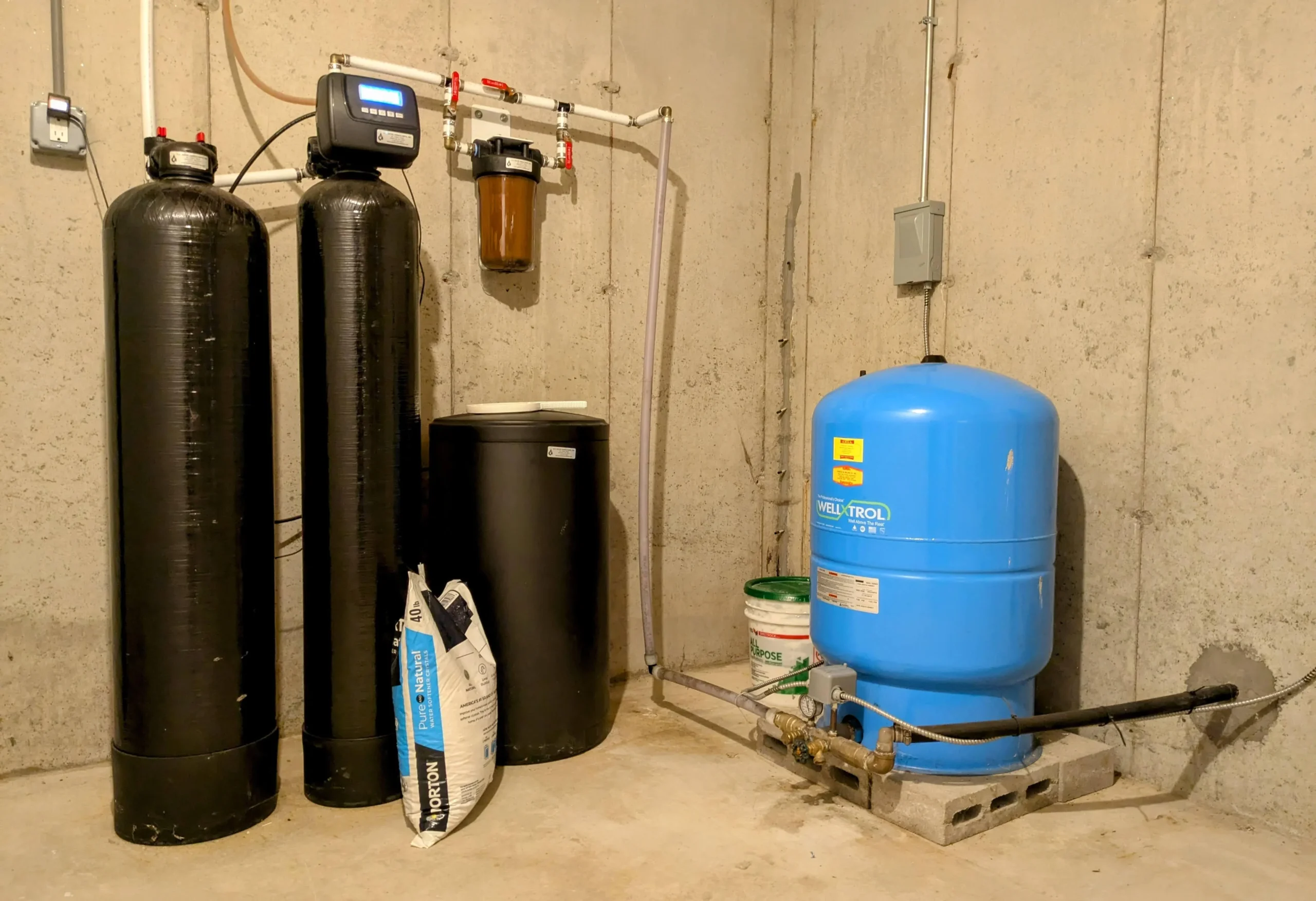
A softener may be useful when hardness is the main concern. Iron treatment can help with staining. Carbon filtration may improve certain taste and odor problems, while other technologies may be appropriate for specific water-quality concerns.
Related reading: When Water Finally Tastes Like It Should
There isn’t one magical machine that fixes everything.
That idea is worth remembering because well-water treatment systems can range from very simple filters to more complex combinations of equipment.
The best setup is usually the one designed around the actual conditions of the water—not the system with the longest list of features.
The Role of Well Water Filtration
Filtration can be particularly helpful when particles or certain unwanted substances are present.
A properly selected well water filtration system can help reduce sediment and, depending on the technology, address specific water-quality concerns.
Sediment is fairly common in some wells, particularly when there are problems with the well itself, plumbing disturbances, or changes in groundwater conditions.
A sediment filter can capture particles before they travel farther into the home’s plumbing.
That can help protect fixtures and other treatment equipment, too.
Iron Can Leave More Than a Stain
Iron is one of those well-water problems that’s difficult to ignore once it gets serious.
You may see orange or brown stains in sinks, toilets, bathtubs, or laundry. In some cases, water may have a metallic taste.
The treatment method depends on the form and concentration of iron present. That’s another reason testing matters.
Choosing a system without knowing the type and level of iron can lead to disappointing results. A filter designed for sediment, for example, isn’t necessarily designed to handle dissolved iron effectively.
A little information upfront can save a lot of frustration later.
Hard Water Is Another Common Concern
Many well owners deal with hardness because groundwater naturally moves through mineral-rich formations.
Hard water contains calcium and magnesium. These minerals can leave scale on faucets, showerheads, dishes, and appliances.
You may also notice that soap doesn’t lather as easily or that laundry feels different after washing.
A water softener can help reduce hardness-related problems, but again, testing first is worthwhile.
If hardness is only one part of the problem, you may need a combination of treatment methods rather than relying on a softener alone.
Pay Attention to Water Quality Over Time
Good water quality isn’t something you should evaluate only once.
Private wells can be affected by changes in the surrounding environment, flooding, construction, damaged well components, or other conditions.
Regular testing can help you understand whether your water remains consistent.
It’s also smart to pay attention to everyday clues. If your water suddenly develops a different odor or your fixtures begin staining more quickly, don’t simply assume the treatment system is getting old.
Related reading: The Story Behind the Tap: Why Local Water Companies Still Matter More Than Ever
Something may have changed upstream.
Don’t Forget the Well Itself
It’s easy to focus entirely on filters and treatment equipment while forgetting the actual well.
The condition of the well, well cap, pump, pressure tank, and surrounding area can all matter.
If you’re experiencing recurring water problems despite having treatment equipment, the source should be investigated.
Sometimes the most effective solution isn’t another filter. It may be repairing or maintaining part of the well system.
This is where professional inspection can be valuable, particularly when a problem appears suddenly or keeps returning.
Maintenance Keeps Everything Running
Well-water treatment equipment needs regular attention.
Filters have replacement schedules. Softener systems require appropriate maintenance. Other treatment equipment may need cleaning, servicing, or replacement of specific components.
Don’t wait until water quality noticeably declines before checking the system.
Keep track of filter changes and service dates. Follow manufacturer instructions, and inspect visible connections for leaks or damage.
It isn’t glamorous work, but it’s much easier than dealing with a preventable equipment failure.
When Professional Help Is Worth It
Some basic maintenance tasks are easy for homeowners, but well-water problems can become complicated quickly.
If you’re dealing with persistent odors, unusual staining, significant sediment, sudden water-quality changes, or treatment equipment that isn’t performing as expected, professional help can make sense.
A qualified water professional can review test results, inspect equipment, and help determine whether the issue is with the treatment system, plumbing, or well itself.
That can be far more useful than replacing parts at random.
A Better Approach to Well Water
Owning a private well doesn’t mean your water has to be difficult to manage.
The smartest approach is fairly straightforward: test regularly, understand what the results mean, maintain the well and treatment equipment, and address problems based on evidence rather than assumptions.
Related reading: Clearer Water, Better Life: How Small Fixes Make a Big Splash in Home Water Quality
You don’t need the most complicated system available. You need a system that fits your water.
Once you know what’s actually happening beneath the surface, well-water care becomes much less mysterious. And with the right maintenance, your home’s water can remain a dependable part of everyday life—quietly doing its job, just as it should.